Tree Pravilo
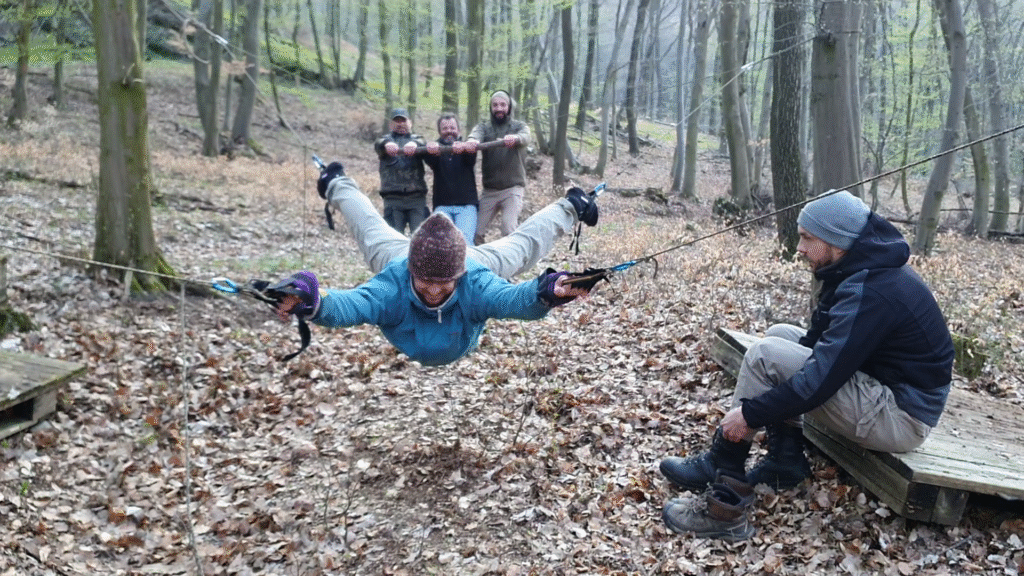
The simplest Pravilo can be set up between trees…

The simplest Pravilo can be set up between trees…
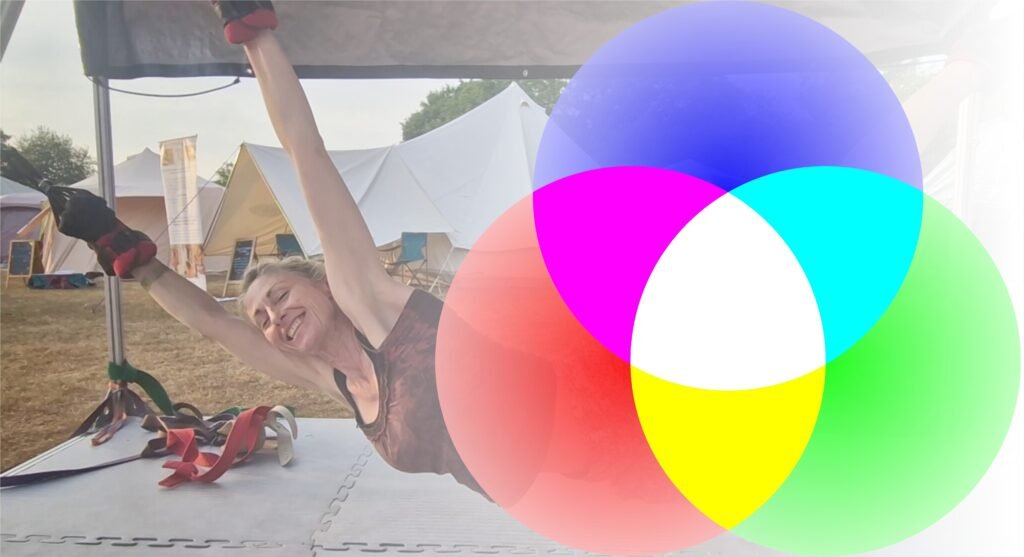
All 3 non-invasive methods synergise their effect, simply improving the efficiency of decompression. Elastic Suspension & Pravilo Manual Release with Traction Conscious Expansion
Conscious Expansion and Contraction Google Meet Live Interactive Class. The instructor can see participants and give feedback. The recording remains available afterwards. Live YouTube Live Stream Class. Participants watch the instructor. The recording remains available afterwards.
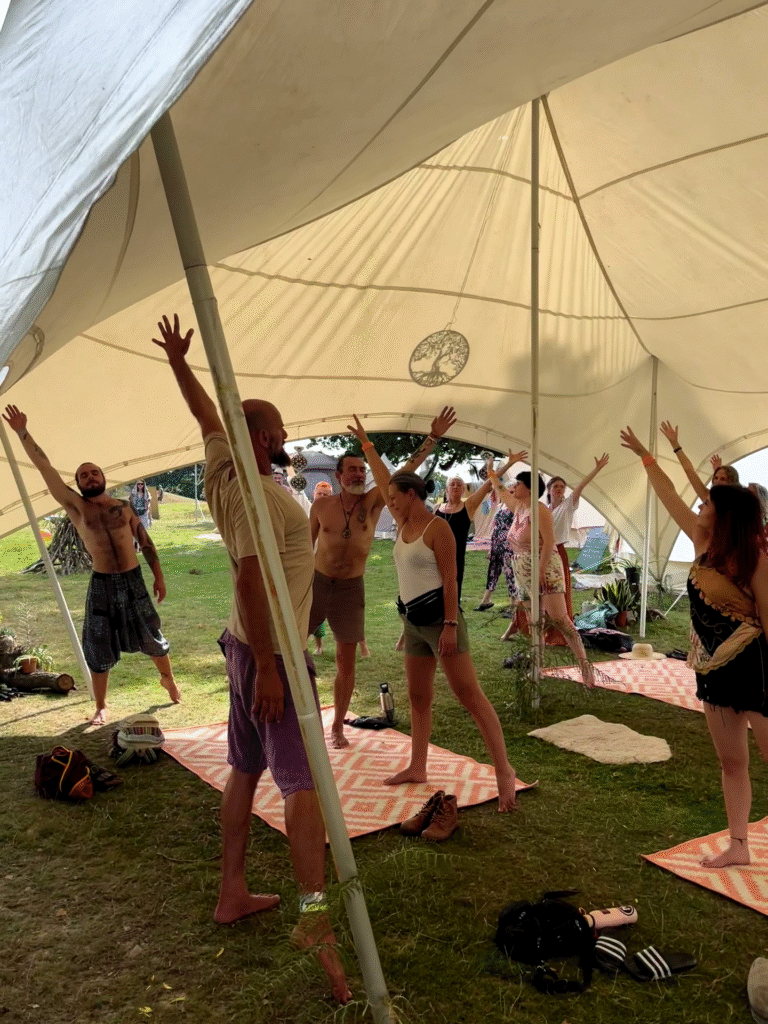
The most important thing is to work actively with expansion and contraction quality in daily life. We have meditations that develop awareness of compression, stress, and contraction. Exercises that help you expand, open up and decompress at any time. Over time, create a habit – you recognise condensing force and begin to expand subconsciously. Mastery of conscious expanding and condensing fasciae (and other tissue) underlies the ‘superhuman strength’ displayed by some Cossacks and Chi Kung masters. Learn how to expand and contract consciously in our course, or join a regular online class. In addition to continuous expanding, we still recommend Pravilo as one of the best methods to expand. However, the best is to combine and synergise all decompression methods! is a great tool to expand and open up, but if you just use Pravilo, in a couple of days or weeks you could slide back to original quality.
The easiest way to decompress instantly is to suspend yourself. You can hang on any bar or tree. Your bodyweight naturally decompresses the joints and spine through dynamic traction. It actively opens the whole body. Suspend in as wide a range of positions as possible. You can suspend through each limb, the head, and all combinations, ideally all at once. Pravilo is designed for these countless suspension possibilities. How to make suspension even more comfortable? Elasticity makes suspension softer, gentler, and safer. The body naturally trusts elasticity more, so it relaxes deeper. The body subconsciously mirrors this elastic quality, becoming more agile and resilient.
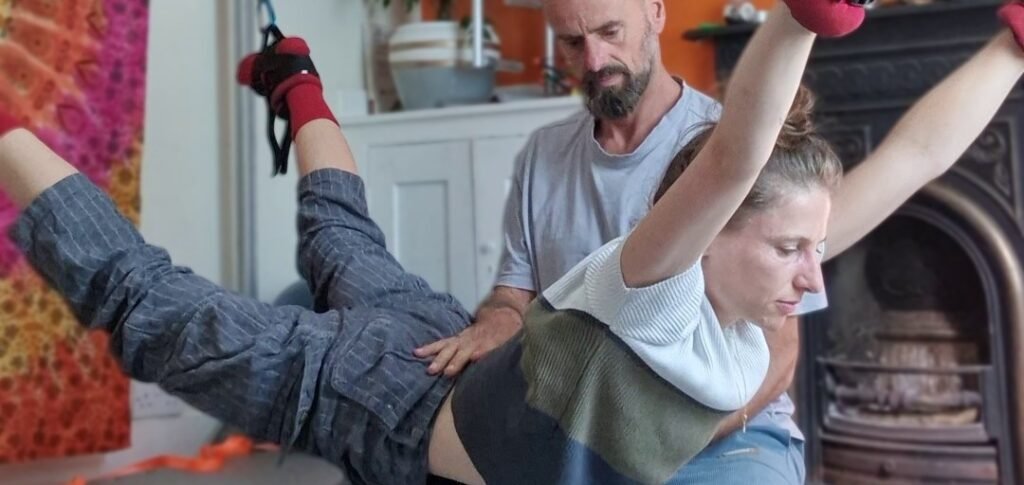
Skilled massage, myofascial release, or manual mobilisation can significantly release pressure. Why not combine both? Apply manual release techniques during elastic traction. You would be surprised how it improves the efficiency of decompression.
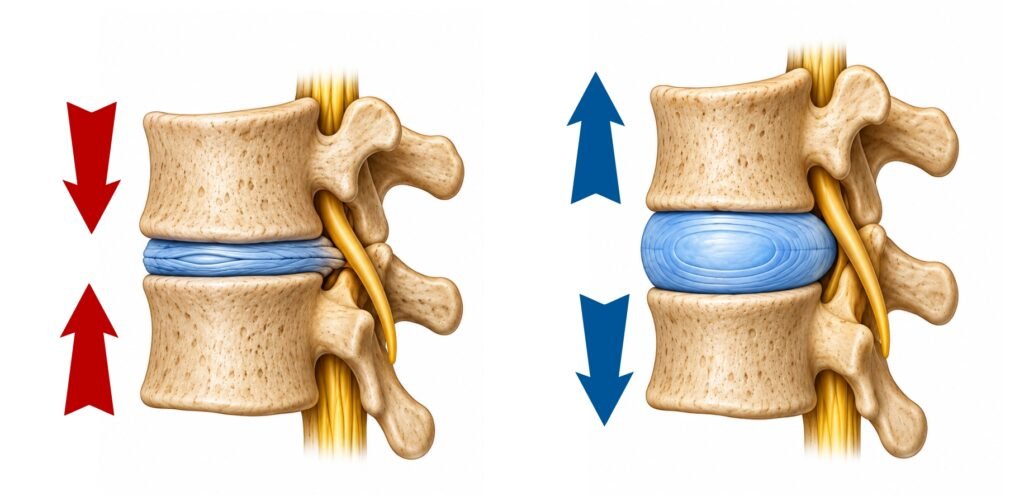
Clinical evidence and research Initiation, direction and supervision: Tibi Moravcik Research and analysis: AI-assisted Benefits_of_Decompression_Therapy_ElasticPravilo_Final.pdf Combined evidence review Prepared from the two supplied analyses, merged and de-duplicated. Mechanistic claims, clinical evidence, safety considerations and device-specific limitations are kept distinct. Executive summary Decompression therapy is not a single standardised intervention. It includes motorised spinal traction, manual traction, suspension-based unloading, inversion, joint distraction and surgical decompression. Evidence therefore depends on the body region, force profile, treatment dose and patient group. The mechanical rationale is credible. Unloading can reduce axial compression and intradiscal pressure, temporarily alter disc height, enlarge some neural foraminal dimensions, and change the mechanical state of muscles, ligaments and other connective tissues. The clinical evidence is much less uniform. The strongest reviews find little or no meaningful benefit for average nonspecific low back pain. More targeted studies in people with disc herniation or radiculopathy report modest short-term improvements, especially when traction is added to active physiotherapy. Long-term evidence remains limited. A scientifically careful analysis therefore needs to distinguish what has been demonstrated mechanically from what has been demonstrated clinically. It should also avoid transferring results from motorised traction devices to elastic or suspension systems without direct evidence. 1. What decompression actually does mechanically Traction applies a tensile force along the axis of a body segment. In the spine, this can produce several measurable mechanical effects: reduced compressive loading during treatment temporary separation or altered orientation of adjacent vertebrae changes in intervertebral disc height changes in the dimensions of the neural foramina changes in the mechanical state of muscles, ligaments and facet joints movement and redistribution of fluid within viscoelastic tissues The key scientific point is that these are immediate or short-term mechanical effects. They should not be presented as proof of permanent structural correction. Visual explanation: spinal compression and unloading Illustration of spinal loading and unloading. The image illustrates the mechanical concept and is not, by itself, evidence of clinical benefit. Watch: Disc decompression in motion The illustration shows the basic mechanical idea of moving from axial compression towards unloading. The linked video is a visual demonstration, not a clinical trial or proof that the same anatomical change occurs to the same degree in every treatment. 2. Intradiscal pressure and disc nutrition Foundational work by Alf Nachemson showed that lumbar intradiscal pressure changes substantially with posture and loading. Classic measurements reported higher loading in unsupported sitting and flexed loading, with much lower pressures in supine or reclined positions. A later in vivo re-measurement using modern transducers broadly confirmed the importance of posture and movement while questioning some of the classic numerical relationships. Traction extends the unloading principle: tensile distraction can reduce intradiscal pressure during the intervention. Because the intervertebral disc is largely avascular and depends heavily on diffusion through the endplate and peripheral tissues, unloading may alter fluid and solute transport. The defensible formulation is therefore that mechanical unloading may improve the disc’s fluid-transport environment. It is not accurate to say that decompression simply “increases blood flow into the disc”. A further honesty check is important: intradiscal-pressure measurements describe mechanical loading, not the source of a person’s pain. Even if a particular posture raises pressure, that does not establish that the disc is the pain generator. 3. Disc height, spinal geometry and foraminal widening Imaging studies provide some of the clearest evidence that traction changes spinal geometry temporarily. A lumbar MRI study found a significant increase in disc height after 30 minutes of traction at 42% of body weight, with the strongest effects in the lower lumbar discs and a larger posterior change. In the cervical spine, in vivo imaging studies have shown increases in foraminal height and area with traction. The practical interpretation is cautious: more anatomical space can reduce mechanical constraint on sensitive structures, but anatomical change does not automatically produce meaningful pain relief. The relationship among anatomy, inflammation, nerve sensitivity and pain is more complex than “more space = less pain”. 4. Possible reduction of nerve-root irritation A spinal nerve root may be affected by reduced foraminal space, disc protrusion or extrusion, osteophytes, facet changes, ligamentous thickening and local inflammation. Traction can enlarge foraminal dimensions and alter the mechanical environment around the exiting nerve. This provides a plausible explanation for why a subgroup of patients with radicular symptoms may respond better to traction than people with nonspecific low back pain. A systematic review and meta-analysis found short-term improvements in pain and disability when supine mechanical traction was added to physiotherapy for lumbar radiculopathy, although favourable findings were driven largely by lower-quality studies. An older randomised trial also suggested that patients with leg symptoms and clinical signs of nerve-root compression may be a more responsive subgroup. The observed benefit was greater at two weeks and was not maintained at six weeks. 5. Why traction may reduce pain without permanently changing anatomy Pain is not a direct read-out of mechanical compression. Mechanical input from discs, joints, muscles and nerves is processed by peripheral and central nervous systems. Changing loading can therefore alter sensory input and movement behaviour without a large structural change. altered nociceptive input reduced protective muscle activity or guarding greater tolerance of movement changes in perceived threat and movement confidence contextual effects such as expectation, attention, breathing and relaxation A strong subjective improvement is therefore not evidence by itself that a disc has been repositioned. Conversely, the absence of a large structural change does not mean that the person’s symptom relief is imaginary. The mechanisms can be both mechanical and neurophysiological. 6. Myofascial and connective-tissue effects The older idea that fascia simply “melts” from gel to sol under manual pressure is not a satisfactory modern explanation. The forces and durations required to produce permanent mechanical deformation of collagenous tissues are generally much larger than those delivered by an ordinary manual-therapy or traction session. More defensible mechanisms include mechanosensory input and short-term viscoelastic behaviour. Fascia and associated connective tissues contain mechanoreceptors, and sustained pressure or stretch can
1st June How is Pravilo beneficial? Expands the body and decompresses the spine and joints. Improves flexibility and range of motion. Uniquely strengthens tendons, joints, fasciae, and core muscles. Develops the power to expand, enhancing body tensegrity. Balances contracted and loose tissue, supporting spine and joint healing. Positively impacts emotional and mental well-being. Helps release stress, depression, and somatised traumas. Learn more about the benefits Book your Pravilo session Fiona: +44 7786 032830 Read the guidelines before the session About the session A 1-hour session is £70. Feel free to book more slots. Google Maps What does a Pravilo session look like? You choose the intensity and time of expansion to ensure enjoyment. Full lifting is not necessary—participants partly lie on the ground. Suitable for all ages (e.g., 83 y.o. participant featured). Pravilo has helped heal conditions such as disc hernia, sciatica, and damaged hips while awaiting replacement. Additional treatments could include: Myofascial release massage. Sound healing therapy. The guide listens attentively to your preferences. Avoid pain and high intensity; the focus is on what feels good. What say a physio, chiropractic and professional dancer? What say a Yoga instructor? What says an osteopath? Pravilo instructor – Tibi Moravcik movement therapist I analyse relevant aspects of movement and integrate them into one holistic picture. My approach is to synergise knowledge from Martial Arts, Dance, Physiotherapy, and Chi Kung with my personal experience… Co-creator of Expanding Life Instructor of Cossack’s Systema Dancer Sifu of Wing Chun Kung Fu Massage Therapist Pravilo therapist Karate Champion of Slovakia, 2002 Kick Boxing Champion of Slovakia, 2000 “In Tunbridge Wells, we host the first public Pravilo in the UK! I initially built Pravilo to heal my own hip issues. Once I realised its profound impact on myself and others, I founded a Pravilo organisation. Today, I teach Pravilo instructors worldwide while staying connected with the local Tunbridge Wells community.” — Tibi Moravcik Conscious work with opening-expanding and closing-condensing of our bodies, minds and spirits benefits us… Read more about Tibi How does decompression on Pravilo affect the spine?

Elastic – returns after stretch Plastic – deforms and stays changed Viscoelastic – time-dependent response (both elastic + fluid)} Compliant – yields easily Stiff – resists deformation Rigid – almost no movement Tensile – handles pulling forces Compressible – yields under pressure Resilient – absorbs and releases energy Liquid – flows downward, follows gravity Fluid – flows in any direction, adapts and moves freely (up like flame, down, across)

Category Aspect Expansion / Opening Contraction / Closing BODY Posture Elastic with tensegrity Rigid, stiff, or collapsed BODY Breathing Deep, slow, and rhythmic Shallow and rapid BODY Range of motion Big, unrestricted Limited, restricted BODY Elasticity Flexible Rigid BODY Fluidity Flow Crystalise BODY Muscles Fully relaxed and responsive Semi-contracted state BODY Ligaments, tendons, fascia Elastic and strong Rigid, tight, or loose BODY Discs & joints Released by tension and expansion Under pressure, excessive wear BODY Fascial mechanics Uses the force of expansion and elastic recoil Shrinking, compressed fascia BODY Blood pressure Normalises Elevated/high BODY Heart rate Decreases to the optimal level Increases, remains elevated BODY Cardiovascular risk Drops significantly Rises substantially BODY Heart function Works efficiently without strain Works overtime constantly BODY Inflammation Decreases throughout the body Increases throughout the body BODY Digestion overall Restores healthy function Can cause irritable bowel syndrome BODY Digestive activation Activates and functions optimally Slows down BODY Digestive symptoms Acid reflux, nausea, appetite irregularities resolve Acid reflux, nausea, appetite changes occur BODY Throat and voice Open and relaxed Tight, constricted BODY Urinary & bowel Full control Loss of control or dysfunction SLEEP Sleep quality Restorative, natural and effortless Disrupted, difficult SLEEP Nervous system Settles and calms Remains in aroused state SLEEP Coping capacity Enhances ability to handle challenges Reduces ability to cope with stress HORMONAL Stress hormones Cortisol normalizes Cortisol and adrenaline chronically elevated HORMONAL Feel-good hormones Releases oxytocin, serotonin, endorphins Depleted HORMONAL Sleep hormones Balanced Disrupted HORMONAL Appetite regulation Balanced and intuitive Increases (especially sugar/fat cravings) HORMONAL Fat storage Normalizes, healthy metabolism Increases around midsection HORMONAL Immune hormones Supports immune function Suppresses immune system IMMUNITY Immune function Strengthening, enhanced response Suppression, dampened response IMMUNITY Infection resistance More resistant to infections More susceptible to infections IMMUNITY Wound healing Accelerates Slows down IMMUNITY Autoimmune risk Decreases Potentially increases IMMUNITY Inflammatory response Decreases systemic inflammation Increases systemic inflammation IMMUNITY Disease protection Prevent chronic diseases (arthritis to Alzheimer’s) Links to virtually every chronic disease ENERGY FLOW Kinetic and electromagnetic energy, blood flow, lympha Open to flow Close, get stuck, frozen VISION Vision mode Peripheral, open awareness, spacious awareness, multitasking Focused, tunnel vision, or Inward (closed) VISION Inner sight Clear insight, colours vibrant Black or red veil before eyes MIND Mental state Open, expanded mind Closed, contracted mind MIND Openness to ideas Open to new ideas and perspectives Defensive, rigid thinking MIND Hippocampus Grows and strengthens (memory/learning) Shrinks MIND Amygdala Shrinks, becomes less reactive (fear centre) Enlarges, hyper-reactive MIND Prefrontal cortex Functions optimally (decision-making/regulation) Becomes impaired MIND Mental clarity Sharp, clear, focused concentration Brain fog, confusion MIND Memory Strong and reliable Problems and gaps MIND Focus Sustained concentration emerges Difficulty concentrating develops MIND Thinking Holistic, see patterns, structure Linear, fragmented EMOTIONS Primary emotions Love, curiosity, joy Fear, stress, anxiety, or depression EMOTIONS Heart state Open heart Closed heart EMOTIONS Physical expression Open arms, welcoming Crossed arms, defensive EMOTIONS Emotional stance Vulnerable, receptive Defensiveness, protecting EMOTIONS Mood Lifts, optimistic Depression, pessimism EMOTIONS Resilience Emotional resilience increases Emotional fragility increases HEAD & HEART In heart, Spirit acts In the head, Mind acts ORIENTATION Focus for Theocentric – for God Egocentric – for himself ORIENTATION Connection with flow Open to give and receive Close to give or receive TIME Present moment Lost in future or past CREATIVITY Creative flow Ideas flow freely, The mind wanders elsewhere, or blocked, stuck CREATIVITY Using potentials Like creating Could destroy, or waste potential CREATIVITY Problem-solving Playful experimentation, novel solutions emerge naturally Repetitive patterns, same old approaches CREATIVITY Expression Uninhibited self-expression Self-censorship, fear of judgement CREATIVITY Imagination Expansive, possibility thinking Constrained, “can’t” thinking CONTACT Social flow Flow state, harmonious Crystallised, stuck, frozen CONTACT Relationship Body, mind, and spirit in symphony Disharmony, tension CONTACT Universal connection Open and United with the whole Universe Closed and Separated with the whole Universe CONTACT With others Collaboration, peace Competition, conflict POSTURE Straight, with mutual respect A hunched back, ready to flinch POSTURE Brave Scared POSTURE Accept, open Protecting, closing POSTURE Active Passive FREEDOM & RESPONSIBILITY Agency Self-directed, autonomous Manipulated, controlled by others FREEDOM & RESPONSIBILITY Get responsibility for him and society Govern himself, participate in higher social structures Look for someone who rules him FREEDOM & RESPONSIBILITY Manipulation Critical thinking, see principles, trends, structures, qualities, and measures Labels, relying on ‘authorities’ HAPPYNESS Joy, loving and loved, curious, in wonder Close, stress, passive, stuck, resist, gave up